Diagnostic tests – an asset for the proper use of antibiotics

Since the COVID-19 pandemic, diagnostic tests such as PCR and rapid tests have become part of the public lexicon. Rapid diagnosis also plays a crucial role in identifying and treating microbial infections, and in slowing down antimicrobial resistance (AMR).

Rapid advances in medical, biological, technological and digital knowledge are prompting the in vitro diagnostics industry to invest more than ever in the development of innovative solutions. New diagnostic tests are being made available to laboratories and technical platforms to support better antimicrobial prescribing throughout the care pathway.

This translates as:

  • In general practice, with tests carried out in the presence of and close to the patient during the consultation with the doctor (Point of Care Testing POCT). For example, in the case of respiratory infections, rapid and simplified identification of pathogens is possible using syndromic panels, rapid tests, or tests carried out in centralised technical platforms in biological laboratories.
  • In hospitals, with tests relocated to emergency departments close to patients (Near Patient Testing, NPT), and in central laboratories where syndromic panels, microbiological identification tests and antibiograms can be performed. These laboratories are increasingly benefiting from information aggregation software (Clinical Decision Support Systems, CDSS), which facilitates the analysis of results.

Regardless of where diagnostic tests are performed, digitising results plays a key role in ensuring traceability and linking them to patient records and care pathways. The aim is to offer greater speed and accuracy at the lowest possible cost and as close as possible to patients and healthcare professionals, without compromising the quality of diagnostic services.

New diagnostic tests, used appropriately by healthcare and multidisciplinary teams (e.g. antibiotic stewardship committees, hygienists), contribute to better use of antibiotics; reduce the risk of antibiotic resistance; improve the quality of care (e.g. acute respiratory infections1, bacteraemia 2, 3, use of CDSS4); and increase the efficiency of healthcare facilities. Rapid and accurate diagnosis makes it possible to avoid or reduce unnecessary medical procedures and longer, more expensive tests that have become obsolete, while freeing up medical time and promoting the autonomy of healthcare staff (e.g. NPT in emergency departments). Beyond that, the entire management of community-acquired and hospital-acquired infections benefits from this diagnostic innovation.

The benefits of improved care extend to society as a whole once patients leave hospital: fewer readmissions, the ability to return to work or school quickly, and fewer short- and long-term complications. It is these societal impacts that should be properly valued.

In a context of heightened budgetary and organisational constraints on healthcare systems, there are opportunities for efficiency in terms of medico-economic value that can be exploited. The impact of recent diagnostic developments must be assessed in all their dimensions, both in private practice and in hospitals, for patients, healthcare professionals and society.

This is why the strategic committee for the healthcare sector on ‘antibiotic resistance’ has decided to make this a collaborative focus, involving government authorities, academic research organisations, health economists, and pharmaceutical and in vitro diagnostics manufacturers.

What better commitment to the common good could there be?


References

1Subramony 2016. Impact of Multiplex Polymerase Chain Reaction Testing for Respiratory Pathogens on Healthcare Resource Utilization for Pediatric Inpatients. J Pediatr http://dx.doi.org/10.1016/j.jpeds.2016.02.050

1 Subramony 2016. Impact of Multiplex Polymerase Chain Reaction Testing for Respiratory Pathogens on Healthcare Resource Utilization for Pediatric Inpatients. J Pediatr http://dx.doi.org/10.1016/j.jpeds.2016.02.050

2 Timbrook, 2017. The Effect of Molecular Rapid Diagnostic Testing on Clinical Outcomes in Bloodstream Infections: A Systematic Review and Meta-analysis. Clin. Infec. Dis. 64(1):15-23

3 Pliakos 2018. The Cost-Effectiveness of Rapid Diagnostic Testing for the Diagnosis of Bloodstream Infections with or without Antimicrobial Stewardship Clin. Microbiol. Rev. 2018:31(3):E00095-17

4 Laka 2020. Can Evidence-Based Decision Support Tools Transform Antibiotic Management? A Systematic Review and Meta-Analyses. J. Antimicrobial. Chem. 75(5):1099-1111

5 Clark 2020. Clinical impact of a routine, molecular, point-of-care, testand-treat strategy for influenza in adults admitted tohospital (FluPOC): a multicentre, open-label, randomized controlled trial. Lancet Respir Med; 9: 419–29


Autor

François Lacoste

Senior VP Public Health

Institut Merieux

Transferable exclusivity extensions to fund research into antibiotic resistance

While the need for new antibiotics is urgent and should naturally attract investors, there is too little innovation and R&D in the field of antibiotic resistance. We are facing what is known as a market failure, the main reason for which is linked to the need to preserve their value for public health. Indeed, the consumption of antibiotics has a private, short-term value for each patient, but it also has an impact on the population as it promotes the development of antibiotic resistance. To take this externality into account, the aim of healthcare systems will be to reduce antibiotic consumption in order to preserve their effectiveness and only use them as a last resort. This means that manufacturers launching new antibiotics on the market could only expect small sales volumes. High sales prices would therefore be necessary to ensure profitability. However, sales prices are low because it is too risky for regulators to approve high prices for drugs with no immediate side effects and no out-of-pocket costs, which manufacturers would then have an incentive to promote. This combination of low prices and low volumes explains the lack of investment in innovation in new antibiotics.

Solution #1

One possible solution that has unfortunately not been used so far would be to require the use of a diagnostic test for any use of antibiotics, for which very high prices could then be paid for effective innovative antibiotics. This would require the authorities to commit to very high prices and strict regulation requiring the use of tests. This type of regulation would stimulate innovation efforts against antibiotic resistance by enabling the industry to invest more in diagnostics and antibiotics. Without this joint regulation of mandatory diagnostics allowing the use of very expensive innovative antibiotics, the market value of innovations against antibiotic resistance will remain too low to generate innovation.

Solution #2

An alternative to this regulation is to disconnect the innovator’s remuneration from the quantities sold by promising a fixed reward for the inventors of an innovative antibiotic that would be available and usable as a last resort.

Thus, the idea was put forward to offer a sufficiently large reward to any innovator who could find a cure for multi-resistant bacteria. The difficulty lies in establishing an incentive that is sufficiently significant. The United Kingdom recently launched a pilot programme, but this type of initiative faces the problem of free riders. Since innovation is a public good, no country will want to pay for it alone, but each country has an interest in minimising its potential contribution, which makes it impossible to finance innovation. This result has been demonstrated by Moisson, Dubois and Tirole (2023).

Solution #3

An alternative is to use transferable exclusivity extensions or vouchers, which could be implemented by the European Medicines Agency and whose principle was proposed by the European Commission in the new medicines legislation of 26 April 2023.

With such a system, innovators receive extended intellectual property rights for the development of a new antibiotic. They can use it themselves or sell it to the owner of a highly profitable drug (a blockbuster) whose patent (and therefore period of exclusivity) is about to expire, thereby delaying the arrival of equivalent generic drugs. At the European level, the European Medicines Agency (EMA) could be the regulator of these vouchers.

The advantage of this mechanism is that it applies to every country that uses this other medicine. Of course, this means that the medicine benefiting from extended exclusivity is sold at a high price for a longer period of time. This mechanism therefore has a social cost, since it is financed by the healthcare system of each country.

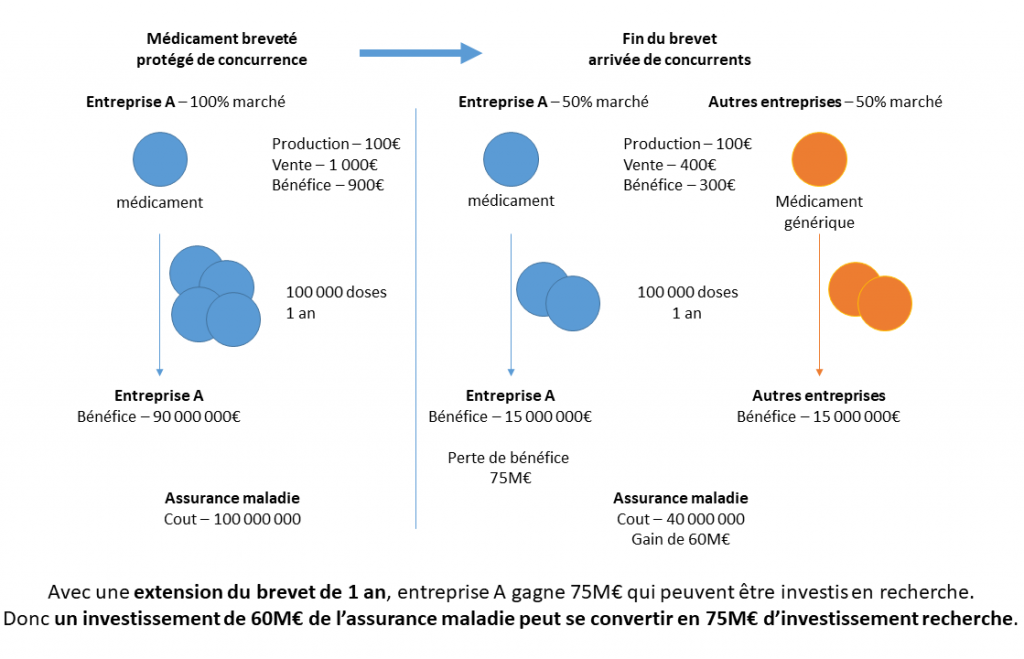
Figure 1: Example of voucher-based funding to finance investment in antibiotic resistance

However, Dubois, Moisson and Tirole (2023) compared the cost/benefit ratio for the community of remunerating innovators in the form of vouchers versus traditional direct reimbursement in various European countries. This comparison shows that the cost of vouchers is generally lower due to the margin on generic drugs and the cost of public funds. Let us take the simplified example (Figure 1) of an innovative drug with a marginal production cost of €100, sold for €1,000 while its patent protects it from competition. With a market of 100,000 doses per year, the originator company therefore makes a profit of £90 million per year, at a cost to the health insurance system of £100 million. When generics enter the market, assuming they acquire a 50% market share and the price becomes €400 per dose, the profits of the original manufacturer fall to £15 million and those of the generic manufacturer are also £15 million, at a cost to insured persons of £40 million. In such an example, the originator company would therefore be willing to pay up to 75 million to extend the drug’s exclusivity by one year. This is the amount that an innovator holding a transferable extension of exclusivity could charge a profitable patent holder, which would finance €75 million in R&D at a cost to society of £60 million, since the 100,000 doses of the drug would cost £1,000 instead of £400 for an additional year.

The system is therefore beneficial both politically, in terms of aligning all European countries in a common direction, and in terms of the efficiency of public spending.

In practice, instead of setting a period of extended exclusivity (transferable) as a reward for an innovator, it may be preferable to reward them with a fixed voucher amount (sufficient to encourage investment in the fight against multi-resistant bacteria, for example), which will be auctioned between the innovator and pharmaceutical companies: the one offering the shortest period of exclusive market maintenance will be selected.


References

Dubois, Moisson, Tirole (2023) « L’économie des prolongations de brevets transférables » mimeo

Dubois, Moisson, Tirole (2023) « Les extensions de brevets transférables peuvent-elles résoudre la défaillance du marché des antibiotiques ? » https://www.tse-fr.eu/sites/default/files/TSE/documents/HealthCenter/2022-11_transferable_patent_extensions.pdf

Moisson Paul-Henri, Pierre Dubois, Jean Tirole (2023) “The (Ir)Relevance of the Cooperative Form”, TSE Working Paper, n. 23-1453, June 2023.


Autor

Pierre Dubois

Professor of Economics

Toulouse School of Economics

Stratégie d’accélération MIE-MN – Liste des pathogènes prioritaires

L’ANRS | Maladies infectieuses émergentes a travaillé à l’élaboration d’une liste de familles de pathogènes ayant un fort risque de déclencher une crise naturelle, accidentelle ou provoquée, afin de concentrer les efforts de préparation de la France dans le cadre de la stratégie d’accélération MIE-MN.

Dans cette liste figurent 6 types de bactéries dont deux résistantes :

Les maladies infectieuses émergentes ou ré-émergentes sont une priorité de santé publique. L’exemple récent de la pandémie de Covid-19 est l’illustration concrète de l’impact de ces maladies sur la santé mais aussi sur les économies et les sociétés. 

Dans ce contexte, la mise en place de projets de recherche ambitieux est indispensable pour mieux comprendre, prévenir et contrôler les phénomènes d’émergence des maladies infectieuses, mais également développer des contre-mesures pour diagnostiquer, protéger ou traiter les individus. Ainsi, une réponse globale et intégrée pourra être mise en place pour limiter leurs impacts. 

Pour faire face à ces enjeux, la France s’est dotée d’une Stratégie nationale d’accélération “Maladies infectieuses émergentes et Menaces nucléaires, radiologiques, biologiques et chimiques” (MIE-MN) dans le cadre de France 2030.  

Le socle scientifique de la stratégie est constitué par deux Programmes et Equipements Prioritaires de Recherche (PEPR) complémentaires et qui seront mis en œuvre en étroite collaboration sur 5 ans :

  • Un PEPR MIE, qui porte sur la prévention et le contrôle des maladies infectieuses émergentes. Il est doté de 80 millions d’euros et piloté par l’ANRS | Maladies infectieuses émergentes, en articulation avec l’ensemble de ses partenaires académiques français ;
  • Un second consacre 30 millions d’euros à la prévention des émergences zoonotiques (virus, bactérie ou parasites transmis aux humains par des animaux ou des insectes). Il s’inscrit dans l’initiative internationale PREZODE et est piloté par le CIRAD, l’INRAE et l’IRD.

Plus d’informations sur le site de l’ANRS | Maladies infectieuses émergentes

Awareness-raising on Antimicrobial Resistance: Report of global consultation meeting

Overview

The Quadripartite agencies – the Food and Agriculture Organization of the United Nations (FAO), the UN Environment Programme (UNEP), the World Health Organization (WHO) and the World Organisation for Animal Health (WOAH, founded as OIE) organized two consecutive global consultation meetings for awareness raising on antimicrobial resistance (AMR). The meetings were conducted virtually from 28 to 30 June 2022 and from 5 to 7 July 2022. The consultations brought together diverse stakeholders from across the globe and across the human, animal, plant, and environmental health sectors. Deliberations from the consultations showed a clear global convergence around the core areas of AMR awareness raising in terms of key audiences, areas of work, and engagement approaches.

The priority target audiences identified for joint AMR awareness raising are children and youth, media, parliamentarians, and policy makers. The priorities for developing a common approach to awareness raising include engaging the target audiences in a participatory approach; emphasizing the basics of AMR; and ensuring messages are simple, consistent, and clear; agreeing on common definitions, language, and terminologies of AMR across sectors, and ensuring joint coordination of awareness across sectors. Many cross-cutting opportunities were also identified for joint, multisectoral awareness activities. These include joint pre-service training curricula; joint media briefings and media engagement; showcasing AMR at global sporting events and competitions and creating specific AMR awards for champions; and integrating AMR awareness into internationally recognized days and campaigns.